What this service covers
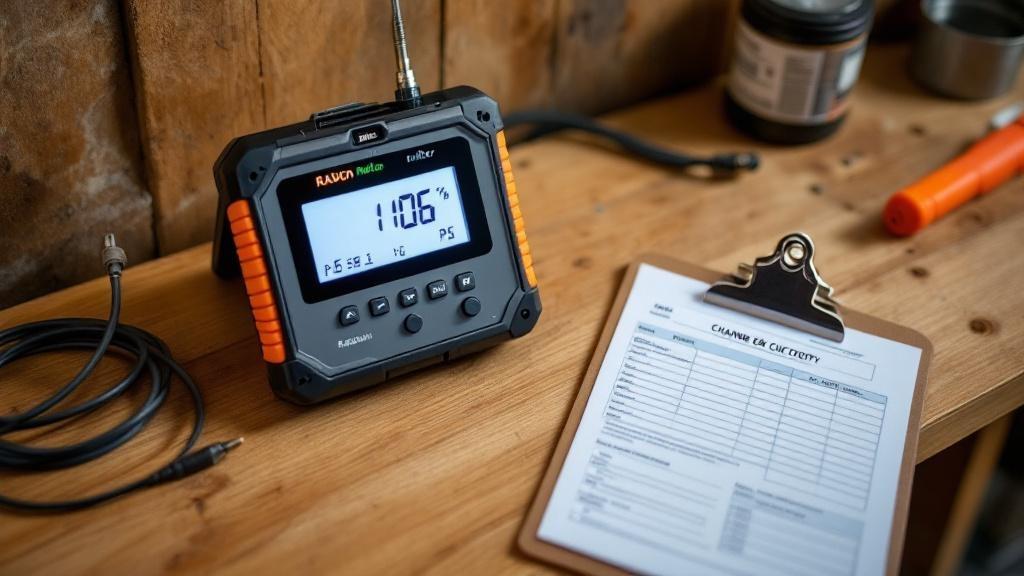
Radon testing for first-time screenings, home sales, post-mitigation checks, and borderline results that need a longer look. Devices are placed to the ANSI/AARST MAH-2023 protocol on the lowest lived-in level under closed-house conditions. Kansas-side tests are run by KDHE-certified measurement technicians as K.S.A. 48-16a01 et seq. requires; Missouri-side tests are run by NRPP or NRSB certified testers, with the certification number on the report.
Typical pricing
$150-$300
Pricing varies by job specifics. Free phone or on-site quotes; fixed pricing once the technician has assessed the job.
The measured record on both sides of the line says test
This is not a metro where testing is a formality. On the Kansas side, the KDHE and Kansas State University county dataset built from 73,959 measurements through 2014 puts the statewide average at 5.1 pCi/L, with 43 percent of all measurements at or above the EPA action level of 4.0. Johnson County, the metro's biggest Kansas county, averages 5.3 pCi/L in K-State's extension data, which means the typical tested home in Overland Park or Leawood reads above the level at which the EPA says fix the house.
The Missouri side keeps pace. The Missouri Department of Health and Senior Services reports that roughly 1 in 3 Missouri homes tested between 2003 and 2023 came back above 4 pCi/L, and the EPA's Missouri zone map places Jackson, Clay, and Platte counties in Zone 1, its highest-potential tier, exactly as the Kansas map does for Johnson and Wyandotte.
Averages describe counties, not houses. Two homes on the same Raytown street can read 2 and 12 because of a patched slab, an open sump, or a crawl under an addition. The county table on our data page shows what is known at the county level, and a $15 to $30 kit or a $150 to $300 professional test answers the only question that matters: your own basement.
Placement and closed-house rules that make a number trustworthy
A radon result is only as good as its conditions. Under the ANSI/AARST MAH-2023 protocol a short-term device sits on the lowest level anyone regularly uses, in a livable room rather than a kitchen, bathroom, laundry, closet, or sump area. It goes 20 inches to 6 feet off the floor, away from exterior walls, windows, vents, heat sources, and the sump pit, and it stays put for the full test window.
Closed-house conditions start at least 12 hours before a short test and hold through it: windows shut, exterior doors used only for coming and going, heat or air running normally, no whole-house fan. Kansas City weather earns one extra caution: short tests are not run through severe storms or sustained high winds, because a cold front slamming through the metro can swing basement pressure enough to distort a 48-hour number. The tester checks the forecast first.
For a home sale the window is tighter and the documentation heavier: a 48-hour minimum, a continuous monitor or paired passive devices, notes on device location and conditions, and a report carrying the tester's certification number, KDHE on a Kansas City, Kansas or Johnson County address, NRPP or NRSB on a Missouri one. The report-reading guide shows what each version should contain.
What to do with the number once you have it
Under 4.0 pCi/L, keep the report and retest in about two years, sooner after a basement finish, new sump, foundation work, or HVAC replacement, and sooner if someone starts sleeping or working on the lowest level. The EPA notes that no radon level is risk-free and recommends considering a fix between 2 and 4 pCi/L, which matters most in houses where the basement is real living space, as it is across most of this metro.
At 4.0 or above, the EPA's guidance is plain: fix the home. A first screening result in that range is worth confirming, either with a second short-term test or, outside a sale, a long-term test of more than 90 days that captures the heating-season swing. Kansas City winters hold houses closed from November into March, so a long-term device set out in the fall gives the year's honest average rather than one week's snapshot.
Results between 2 and 4 are the judgment band. A long-term test across the winter, plus an honest look at who uses the lowest level, usually settles it. Wherever the number lands, the report belongs in your house records; the next buyer's inspector will ask, and a dated history reads far better than a shrug. Start with the decision guide if you are sitting on a borderline result today.
Service area
Radon Testing is available across the Kansas City metro on both sides of the state line. Per-suburb pages: