Radon Mitigation Systems
Active sub-slab and sub-membrane systems for Kansas City basements, slabs, and crawls, built to ANSI/AARST SGM-SF-2023 on both sides of the state line.
Typical$1,200-$2,500
Testing and mitigation across the Kansas City metro, from Lee's Summit to Lenexa. Every install is performed by an NRPP or NRSB credentialed pro, KDHE-certified on Kansas jobs, with a written fixed price and a post-install retest included.
Step 1
Tell us your test result and which side of the state line the house is on, or get help testing first. Ten minutes, plain answers.
Step 2
The foundation, sump, and pipe route get walked and measured, and a written fixed price follows the visit, with the credential of the person doing the work on it.
Step 3
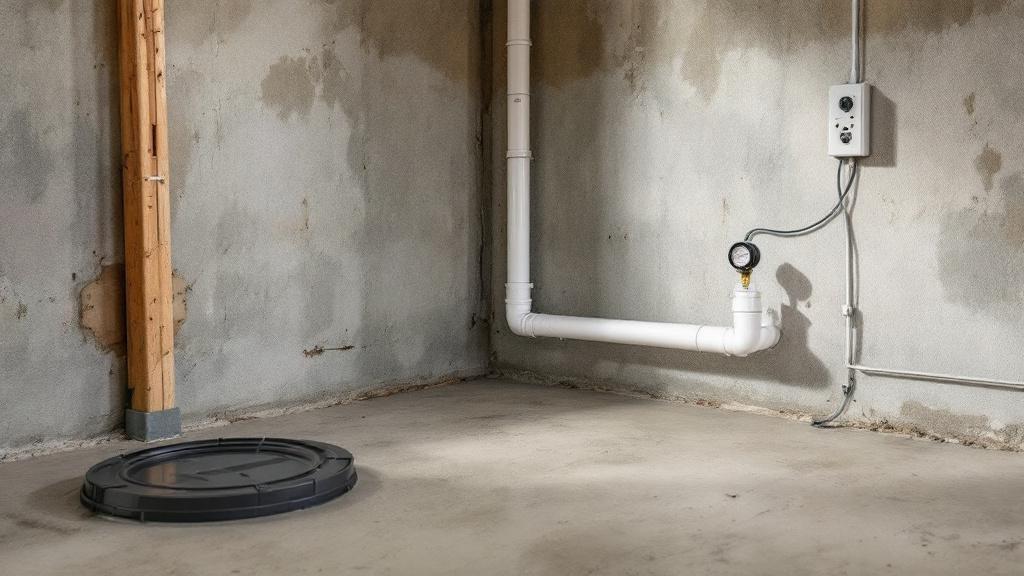
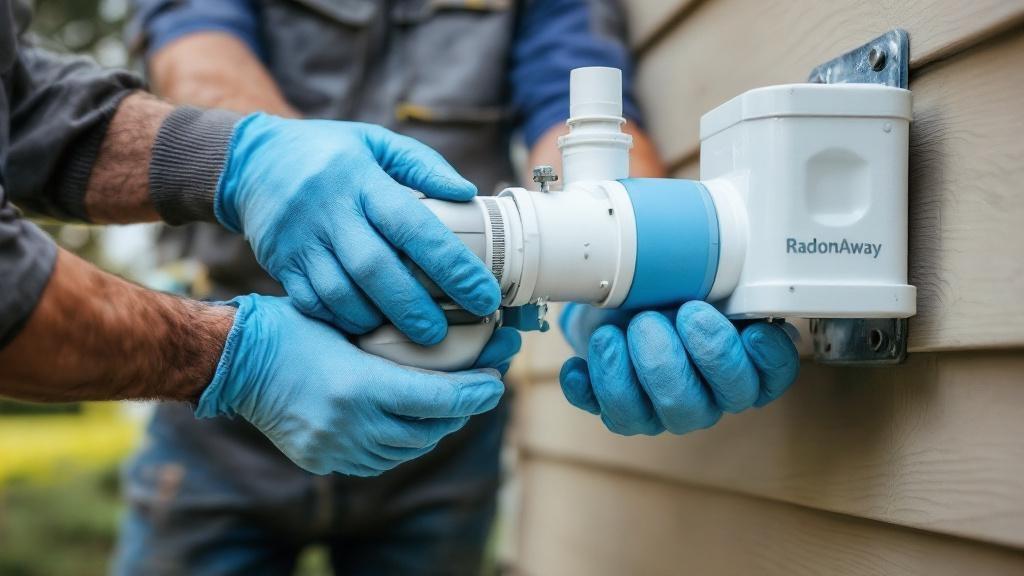
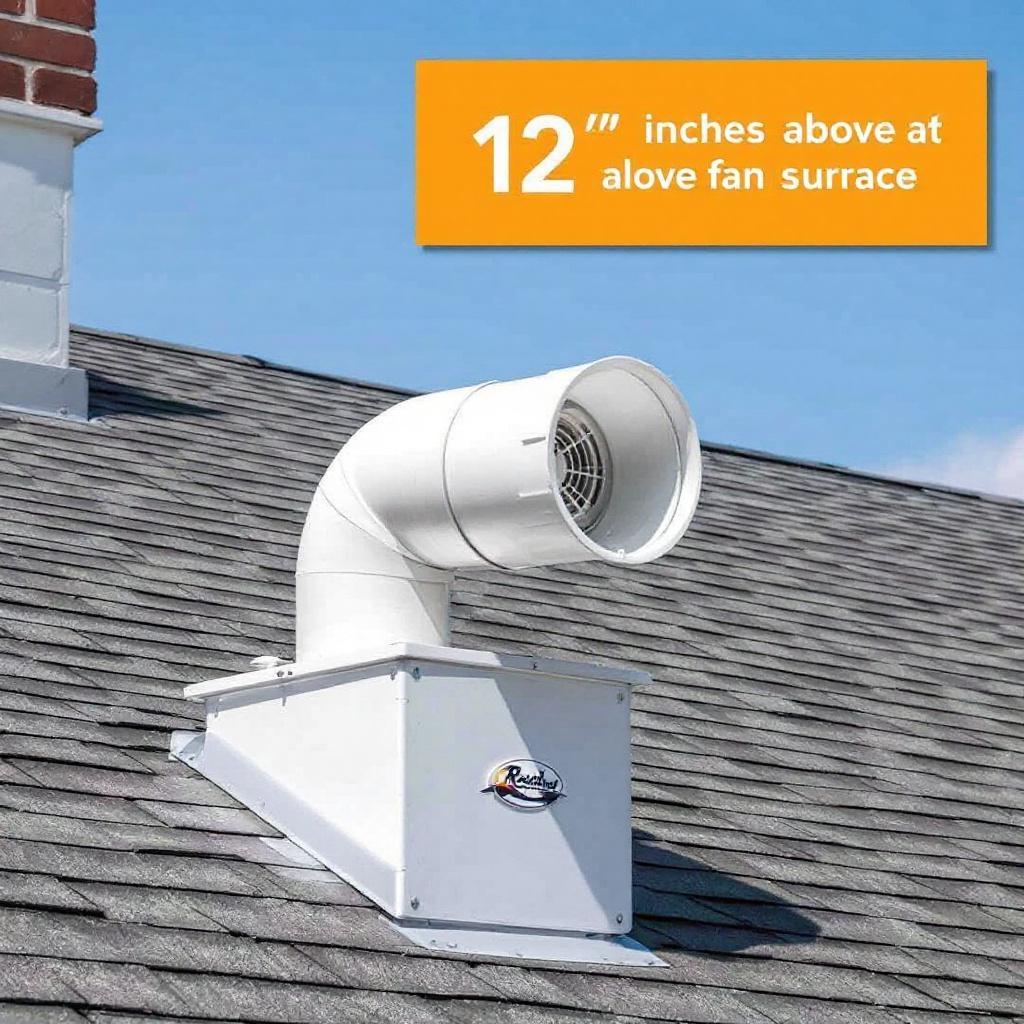
Most basement and slab systems finish in a single day: suction point, sealed joints and sump lid, fan outside the living space, discharge above the eave, manometer on the pipe.
Step 4
A closed-house retest of at least 48 hours confirms the new number, and the written result goes into your house records next to the quote.
Kansas statewide average radon level across 73,959 measurements through 2014, with 43% at or above the EPA action level of 4.0.
Source: Kansas Department of Health and Environment and Kansas State University
Average radon level in Johnson County, Kansas, above both the EPA action level and the Kansas statewide average.
Missouri homes tested from 2003 to 2023 that came back above 4 pCi/L.
US lung cancer deaths linked to radon each year, about 2,900 of them among people who never smoked.
Jackson, Clay, and Platte counties in Missouri are EPA Radon Zone 1.
Johnson and Wyandotte counties in Kansas are EPA Radon Zone 1.
Kansas requires KDHE certification for radon measurement and mitigation technicians under K.S.A. 48-16a01 et seq.
Missouri runs an informational radon program and does not license radon professionals; about 1 in 3 tested Missouri homes exceeded 4 pCi/L from 2003 to 2023.
Thin black shales in eastern Kansas Pennsylvanian rocks carry 15 to 100 ppm uranium, and residual red clay soils can be radium-enriched.
Kansas measurements average 5.1 pCi/L, with 43% of 73,959 at or above 4 pCi/L.
State-by-state summary of radon programs, including which states regulate radon professionals.
Every job comes with a written quote and no-pressure consultation. Workmanship warranty terms are set by your lead technician and confirmed before work begins.
Active sub-slab and sub-membrane systems for Kansas City basements, slabs, and crawls, built to ANSI/AARST SGM-SF-2023 on both sides of the state line.
Short-term and long-term radon testing to ANSI/AARST MAH-2023, with KDHE-certified testers on Kansas-side homes.
Sub-membrane depressurization for crawl spaces and the basement-plus-crawl combinations common in KC ranches and additions.
Transaction testing and deadline-driven mitigation for home sales on either side of the state line.
Schools, daycares, multifamily, and commercial buildings, with multi-zone designs sized to the footprint.
Fan replacement, manometer and alarm fixes, resealing, and retesting for radon systems that have gone quiet or crept back up.
The average American home holds about 1.3 pCi/L of radon. The Kansas City metro starts well above that. Under the whole region lies an alternating stack of Pennsylvanian limestone and shale, and the Kansas Geological Survey notes that thin black shales in that sequence carry 15 to 100 parts per million uranium, many times ordinary rock. Weathering leaves residual red clay soils that can be enriched in radium, the immediate parent of radon gas.
The measurements agree. Across 73,959 Kansas measurements compiled by KDHE and Kansas State University through 2014, the statewide average was 5.1 pCi/L and 43 percent were at or above the EPA action level of 4.0. K-State's extension office puts the Johnson County average at 5.3. On the Missouri side, the Department of Health and Senior Services reports that about 1 in 3 homes tested from 2003 to 2023 came back above 4. The EPA maps Jackson, Clay, Platte, Johnson, and Wyandotte counties as Zone 1.
None of this predicts one house. Two neighbors can read 2 and 12. Our county data page lists what is known, and a test answers the rest.
This is the fact most national radon advice misses about Kansas City. In Kansas, anyone paid to measure or mitigate radon must be certified through KDHE under K.S.A. 48-16a01 et seq., and KDHE lists its certified professionals so a homeowner in Overland Park can look up a name in a minute.
Missouri has no radon licensing program. The state's health department educates and publishes data, but it does not certify testers or mitigators, so a homeowner in Kansas City or Lee's Summit has no state registry to check. The protection there is national: the NRPP and the NRSB certify individuals and publish searchable registries. Require a current number in writing and verify it.
All work arranged here carries the right credential for its side of the line: KDHE certification on Kansas jobs and verified NRPP or NRSB certification on Missouri jobs. The state-line comparison puts both regimes in one table.
Radon testing has become a routine part of metro home inspections on both sides of the line. The test runs at least 48 hours under closed-house conditions with a continuous monitor or paired devices, and the report should carry the tester's certification number: KDHE on a Kansas address, NRPP or NRSB on a Missouri one.
When a result lands at 4.0 or higher, the clock starts. A scope visit and written fixed price, a one-day install, and a 48-hour verification retest fit inside a normal contract window when they start early. Who pays is a negotiation, not a rule, and a written number turns the argument into a line item.
Sellers with an existing system should hand over the install paperwork and a recent retest; buyers should read the manometer at the walkthrough. See our real estate radon service and the closing-deadline FAQ.
The EPA ties about 21,000 US lung cancer deaths a year to radon, about 2,900 of them among people who never smoked. Risk builds with the level and the years of exposure, and it compounds sharply with smoking. Radon causes no symptoms and no sudden harm, so a high result is a reason to fix the house this season rather than to leave it tonight.
The people with the most to gain are smokers and anyone who sleeps, works, or plays on the lowest level. That matters here, because Kansas City basements are living space: rec rooms, teen bedrooms, home offices. The EPA recommends fixing at 4 pCi/L or above and considering a fix between 2 and 4.
Start with the diagnosis page to see which band your result sits in, or the health risk FAQ for the details.
the Kansas City metro on both sides of the state line and surrounding communities. Same-day estimates within 15+ neighborhoods.
Most metro homeowners get a written fixed-price radon testing or mitigation quote within the same business day. Installs follow ANSI/AARST SGM-SF-2023, with KDHE certification on Kansas jobs and verified NRPP or NRSB credentials on Missouri jobs.
Browse all 44 questions for more depth.
Most Kansas City metro basement and slab homes land between $1,200 and $2,500 for an active sub-slab system. Crawl spaces with a sealed membrane run $1,800 to $3,500, activating a builder's passive pipe $700 to $1,200, and a professional test $150 to $300.
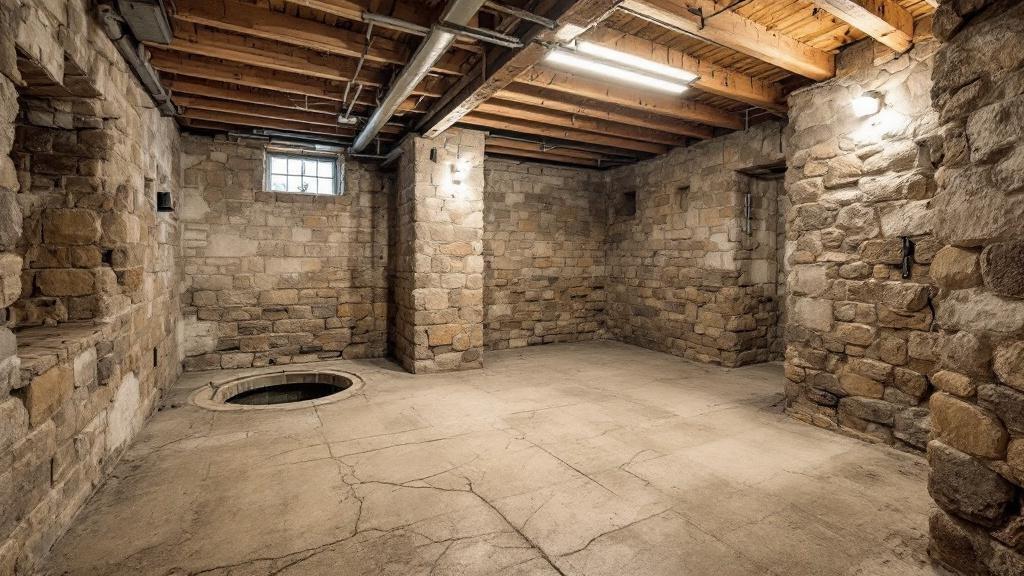
Where a house falls inside those bands depends on the foundation, not the address. A 2005 Olathe poured basement with a clean chase to the attic sits near the bottom. A 1915 shirtwaist in Brookside with stone walls, a sectioned floor, and an open sump sits near the top, and a big Leawood footprint with separate slab pours can need a second suction point that pushes past it. Items that belong in every quote: a manometer on the pipe, a sealed but serviceable sump cover, a fan placed outside the living space, a discharge above the eave, and the credential of the person doing the work, which on the Kansas side means a KDHE certification number and on the Missouri side a current NRPP or NRSB number. The cost breakdown post itemizes all of it, and the calculator gives a starting range for your foundation type.
Yes, on both sides of the line. Every metro county is EPA Zone 1. Kansas measurements average 5.1 pCi/L statewide with 43 percent at or above 4, Johnson County averages 5.3, and about 1 in 3 tested Missouri homes exceeds 4 pCi/L.
The Kansas numbers come from the KDHE and Kansas State University dataset of 73,959 measurements through 2014, and the Johnson County average from K-State Research and Extension; the Missouri figure is the Department of Health and Senior Services' summary of twenty years of testing, 2003 to 2023. The cause sits under the sidewalks: eastern Kansas and the Missouri side of the metro share alternating Pennsylvanian limestone and shale bedrock, and the Kansas Geological Survey notes that the thin black shales in that stack carry 15 to 100 parts per million uranium, with radium-enriched red clay soils weathered out above them. None of that predicts one house; it sets the odds. Two neighbors can read far apart because of a sump, a patched slab, or a crawl. See the county data table and how radon gets in.
Completely. Kansas requires KDHE certification for radon measurement and mitigation technicians under K.S.A. 48-16a01 et seq. Missouri has no state radon licensing program at all, so Missouri-side hiring rests on national NRPP or NRSB certification instead.
This is the single most useful fact a Kansas City homeowner can know before hiring, and almost no national article explains it. On a Johnson or Wyandotte County address, ask for the KDHE certification and check it against the Kansas Department of Health and Environment's radon professionals listing; a company that hesitates has answered your question. On a Jackson, Clay, or Platte County address there is no state registry to call, because Missouri runs an informational program only. The protection there is the national credential: the National Radon Proficiency Program and the National Radon Safety Board both certify individuals and publish searchable registries, so require a current certification number in writing and look it up yourself, which takes about two minutes. The same person can legitimately hold both. Our verification guide walks each registry step by step, and the state-line comparison puts the two regimes side by side.
Kansas law, K.S.A. 48-16a01 et seq., requires anyone performing radon measurement or mitigation for compensation to be certified through the Kansas Department of Health and Environment. KDHE lists certified professionals so homeowners can verify a name before hiring.
The requirement covers both halves of the trade: the technician who places and reads your test and the technician who designs and installs your system. Certification rides on national proficiency credentialing plus state registration, so a certified Kansas pro will typically also carry an NRPP or NRSB number. For a homeowner in Overland Park, Olathe, Shawnee, Lenexa, Leawood, Prairie Village, or Kansas City, Kansas, the practical checklist is short: get the KDHE certification in writing on the quote, confirm it through KDHE's radon professionals page, and expect the install itself to follow ANSI/AARST SGM-SF-2023, the consensus standard for existing homes. A Kansas certification says nothing about Missouri, where no equivalent exists; a pro working both sides of the metro proves the Missouri half with the national registries instead. See how to vet a Missouri-side company.
Missouri issues no radon licenses, so vet the person, not a state registry. Require a current NRPP or NRSB certification number in writing, verify it in that organization's searchable registry, and get proof of insurance and a written fixed price.
The Missouri Department of Health and Senior Services runs an informational radon program: it educates and tracks data, but it does not certify or discipline contractors. That puts the vetting on you, and the national credentials make it manageable. An NRPP or NRSB measurement certification stands behind a test; a mitigation certification stands behind an install; both registries are public and current, and a lapsed number is as telling as a missing one. Beyond the credential, ask three questions that sort pros from drill-and-bill outfits: will the quote state the suction-point count, fan location, and sealing scope; will the discharge end above the eave away from windows; and is a post-install retest included in the price. All installs arranged through this site for Jackson, Clay, and Platte County homes carry verified NRPP or NRSB credentials, and the retest is always included. The verification guide has the lookup steps.
Radon is a radioactive gas produced as uranium in rock and soil decays. It has no color, smell, or taste, collects on the lowest levels of buildings, and long exposure raises lung cancer risk. Testing is the only way to know your level.
Around Kansas City the uranium is geological inheritance. The bedrock under the metro alternates Pennsylvanian limestone and shale, and the Kansas Geological Survey describes thin black shales in that sequence carrying 15 to 100 parts per million uranium, far above ordinary rock, with radium concentrated in the residual red clay soils weathered from them. As that uranium chain decays it produces radon, which moves through soil pores and follows the easiest path upward, including through a foundation. The gas itself leaves your lungs when you exhale; its short-lived decay products do not, and the EPA ties about 21,000 US lung cancer deaths a year to that exposure. For scale, outdoor air averages about 0.4 pCi/L and US indoor air about 1.3, against the 4.0 action level. See why the metro runs high and what your result means.
Through the foundation's openings: the floor-wall joint, slab cracks, sump pits, floor drains, utility penetrations, crawl-space soil, and the joints of stone or block walls. A heated house sits at lower pressure than the soil, so it draws the gas in.
The metro's housing gives the gas plenty of doors. Shirtwaist and bungalow basements from the 1900s to 1920s have stone or clay-tile walls with miles of mortar joint and floors poured in sections, each seam a path. Postwar block basements in Prairie Village, Raytown, and Gladstone breathe through the block cores and the top course. Sump pits, common on both sides of the line because KC clay sheds water at the footings, connect the pit to the drain tile and the soil under the entire slab, which makes an uncovered pit one of the biggest single openings in the house. Split-levels add a half-buried lower level and often a crawl. Winter sharpens all of it: a closed, heated house pulls hardest on the soil from November through March. Sealing those paths supports a mitigation system but does not replace one; see why sealing alone falls short and sump pits and radon.
Zone 1 is the EPA's highest radon-potential tier, counties predicted to average above 4 pCi/L indoors. Jackson, Clay, and Platte counties in Missouri and Johnson and Wyandotte counties in Kansas, the whole metro core, all sit in Zone 1.
The designations come from the EPA's state radon zone maps for Missouri and Kansas, which fold together geology, aerial radioactivity, soils, and measured indoor data. Zone 1 is a screening tool with two honest limits. It describes county averages, so it cannot clear or condemn any single house, and the EPA itself says the map should never be the reason a home goes untested. The measured record behind the designation is what makes it persuasive here: 43 percent of 73,959 Kansas measurements at or above 4 pCi/L in the KDHE and K-State data, a 5.3 pCi/L Johnson County average, and roughly 1 in 3 tested Missouri homes above the action level per DHSS. Read the zone as the prior probability and your own test as the evidence. The county table lists each county's designation with sources, and a test settles your house.
Testing and mitigation across the Kansas City metro, from Lee's Summit to Lenexa. Mon-Sat 8am-7pm.